why don't laptops come with dvd drives anymore
Back then, a laptop with DVD drive was not just a nice-to-have but a must-have. But today, if you shop for a new laptop, you’ll likely struggle to find one with a built-in DVD drive. So, why don’t laptops come with DVD drives anymore? Let’s break down the factors that pushed this once-essential component into obsolescence.
First and foremost, digital storage and distribution have completely replaced physical discs. In the past, DVDs were the go-to for large files: a single DVD could hold around 4.7GB of data, which was impressive for its time. But today, USB flash drives, external hard drives, and cloud storage offer far better alternatives. A 32GB USB drive—small enough to fit on a keychain—holds the equivalent of 8 DVDs, with faster read/write speeds (up to 100MB/s or more, compared to a max of 72MB/s for a 16x DVD). Cloud storage takes it a step further: you can stream movies, download software, and back up data without any physical device at all. With high-speed internet now ubiquitous, installing an operating system or a game via a download is faster and more convenient than fumbling with a DVD.
The quest for thinner, lighter laptops also sounded the death knell for built-in DVD drives. Laptop manufacturers have spent years refining designs to prioritize portability—think ultrabooks and thin-and-light models that weigh just 2-3 pounds. A DVD drive is bulky: it requires a significant amount of internal space and adds unnecessary weight. By removing the DVD drive, brands can fit larger batteries (extending battery life), better cooling systems, or additional ports—features that modern users value far more. For most people, the trade-off is worth it: a sleek, portable laptop is infinitely more useful in daily life than a bulky one with a rarely used DVD drive.
DVDs themselves have serious limitations that make them outdated. Unlike USB drives or cloud storage, most DVDs are read-only—you can’t edit or rewrite data once it’s burned. They’re also fragile: a single scratch can render an entire disc unreadable, putting your data at risk. And let’s not forget the inconvenience of managing physical discs—storing hundreds of DVDs takes up space, and finding a specific one in a pile is a hassle. As consumers and businesses shifted to more flexible, durable storage solutions, the demand for DVD drives plummeted.
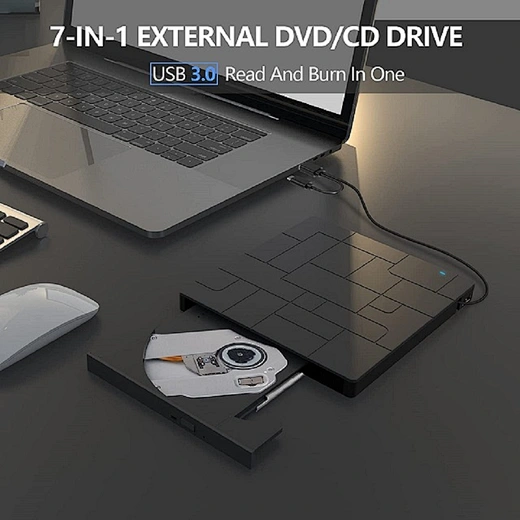
It’s worth noting that while built-in DVD drives are rare, a laptop with DVD drive isn’t entirely extinct. Some brands, like Dynabook and NEC, still offer business-focused laptops with built-in DVD or Blu-ray drives catering to niche markets. These include industries like healthcare, legal, and education, where physical discs are still used for archiving sensitive data or distributing specialized software. For most users, though, external DVD drives—affordable, compact, and plug-and-play via USB—fill any remaining needs. You can pick one up for under $50, use it only when necessary, and store it away when not in use.

Apple played a pivotal role in accelerating the decline of DVD drives. The company’s MacBook Air, first released in 2008, famously omitted a DVD drive, prioritizing thinness and portability. At the time, it was controversial, but it set a trend. Apple further reinforced this shift with the Mac App Store, which made downloading software completely disc-free. Other manufacturers soon followed suit, realizing that consumers were willing to abandon DVD drives for better laptop design and digital convenience.
So, why don’t laptops come with DVD drives anymore? It’s a perfect storm of technological progress: better storage alternatives, demand for portability, the fragility of DVDs, and the rise of digital distribution. A laptop with DVD drive now feels like a relic of a time when physical media was king—but that time has long passed. For most of us, external drives or digital solutions are more than enough for the rare occasions we need to interact with a DVD. The era of built-in DVD drives is over, and it’s hard to imagine it coming back.
what is an optical drive
can you buy a notebook computer with a dvd drive