what is the function of the optical drive
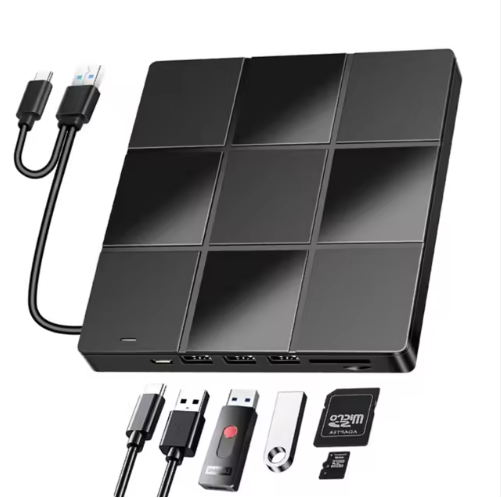
However, for those who have experienced the early development of computers, the optical drive is definitely an unforgettable device. Many people may still have questions: what is the function of the optical drive? Today, we will take a deep dive into this classic storage device and clarify its core functions and historical value.
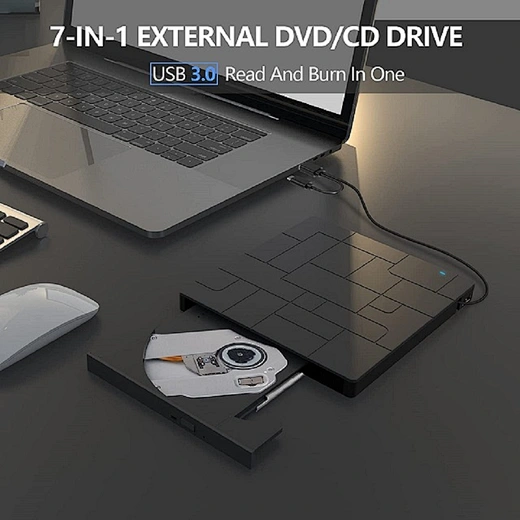
First, let’s briefly understand what an optical drive is. An optical drive is a hardware device that uses laser light to read or write data on optical discs. Common optical discs include CDs, DVDs, and Blu-ray discs, and different types of optical drives correspond to different disc formats. From the early CD-ROM drives to the later DVD burners and Blu-ray drives, the optical drive has undergone continuous upgrading, but its core working principle and basic functions have remained relatively consistent.

Answering the question “what is the function of the optical drive” requires starting from its two most core capabilities: data reading and data writing. The first and most basic function isdata reading. In the early days when USB flash drives were not popular and network speeds were slow, optical discs were one of the main carriers for software, games, movies, and music distribution. For example, when you bought a computer game or a system installation disc, you needed to insert the disc into the optical drive. The optical drive would then use a laser to scan the tiny pits and lands on the disc’s surface, convert these physical signals into digital signals, and transmit them to the computer, allowing the computer to recognize and run the content on the disc. This function made the optical drive an indispensable device for installing operating systems, playing optical disc movies, and using large-scale software at that time.
The second core function of the optical drive is data writing, which is mainly realized by writable optical drives such as CD-RW drives, DVD-RW drives, and Blu-ray burners. Unlike read-only optical drives (such as CD-ROM drives) that can only read data, writable optical drives allow users to write their own data onto blank optical discs. This function was very practical in the past: for example, users could burn important work documents, photos, and videos onto blank CDs or DVDs for backup; music lovers could burn their favorite songs into a music CD to play in the car or CD player; video creators could burn their works onto DVDs for distribution. Compared with other storage devices at that time, optical discs had the advantages of low cost, long storage time, and not being easily affected by magnetic fields, so the data writing function of the optical drive was widely used.
In addition to the two core functions mentioned above, the optical drive also has some auxiliary functions derived from its basic principles. For example, some optical drives support disc playback control, such as pausing, fast-forwarding, and rewinding when playing audio and video discs, which is similar to the function of a DVD player. Some high-end optical drives also have error correction functions, which can automatically correct minor errors in data reading caused by disc scratches or dust, ensuring the stability of data transmission.
With the development of technology, the status of the optical drive has gradually declined. The popularization of high-speed networks makes it easier for people to download software and video resources online; USB flash drives and external hard drives have the advantages of small size, large capacity, and fast transmission speed; cloud storage allows users to access data anytime and anywhere. Under such circumstances, optical discs and optical drives are no longer the first choice for most users. However, this does not mean that the optical drive has completely withdrawn from the stage of history. In some specific fields, such as enterprise data archiving (optical discs have a longer storage life), medical equipment (some professional equipment still uses optical discs to store data), and the film and television industry (some classic works are still distributed in Blu-ray disc format), the optical drive still plays an irreplaceable role.
To sum up, the answer to “what is the function of the optical drive” is clear: its core functions are reading data from optical discs and writing data to writable optical discs, and it also has auxiliary functions such as audio and video playback control and error correction. Although the optical drive is no longer the mainstream storage device in daily life, it has made important contributions to the popularization and development of digital technology. For those who have witnessed the glory of the optical drive, it is not only a hardware device but also a memory of the development of the digital age.
how does a floppy drive work
what is an optical drive