how wide are most optical drives
Whether you’re upgrading your old desktop, troubleshooting a laptop’s optical drive, or just curious about tech hardware basics, understanding the standard width of optical drives is key. In this post, we’ll break down the most common widths of optical drives, explain why these standards exist, and touch on variations across different device types.
First, let’s answer the core question directly: most optical drives used in desktop computers have a standard width of 5.25 inches (approximately 146.1 mm). This is not an arbitrary number—it’s a well-established industry standard that aligns with the 5.25-inch drive bays in most desktop computer cases. For decades, this width has been the norm for internal optical drives, including CD drives, DVD drives, and Blu-ray drives, which are all typical types of optical drives.


Why 5.25 inches? The standard dates back to the early days of personal computing, when drive bays were designed to accommodate floppy disk drives of the same size. As optical drive technology emerged and replaced floppy drives, manufacturers adopted the existing 5.25-inch bay standard to ensure compatibility. This compatibility is crucial for both consumers and manufacturers: consumers don’t have to worry about whether a new optical drive will fit their desktop case, and manufacturers can mass-produce drives without retooling for multiple sizes. Most desktop optical drives are “half-height” models, meaning they take up half the vertical space of the original full-height 5.25-inch bays, but their width remains consistent at 5.25 inches.
Of course, there are variations for specific use cases, especially when it comes to laptops and external optical drives. Laptops require smaller, slimmer components, so their built-in optical drives (when present) have a much narrower width. The most common width for laptop optical drives is 12.7 mm, with some ultra-slim models as thin as 9.5 mm. These slim optical drives are designed to fit within the compact chassis of laptops, prioritizing portability over the larger size of desktop counterparts. It’s worth noting that while 12.7 mm is common for laptop optical drives, this size is not considered the “most common” overall—desktop 5.25-inch optical drives still dominate the market when talking about optical drives in general.
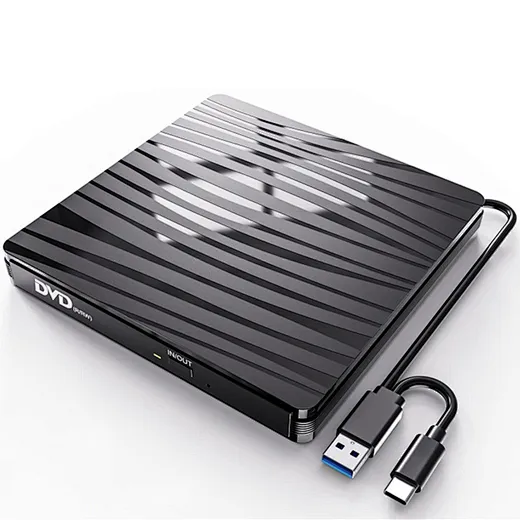
External optical drives, which connect to computers via USB, are another variation. Their width can vary slightly by manufacturer, but many external models are based on the slim 12.7 mm or 9.5 mm internal drives, enclosed in a protective casing. This makes them portable and compatible with both laptops and desktops that lack built-in optical drives (a growing trend in modern computing).

It’s also important to distinguish between the width of the optical drive itself and the width of the discs it uses. For example, standard CDs and DVDs have a diameter of 120 mm (4.75 inches), which is smaller than the 5.25-inch width of the drive. The drive’s width is determined by the need to fit into the computer’s bay, not the size of the disc it reads. This is a common point of confusion, but remembering that drive width refers to the chassis size (for bay compatibility) vs. disc diameter (for data storage) clears it up.
While optical drives are less common in modern computers due to the rise of USB drives and cloud storage, they’re still used in specific scenarios—like burning media, accessing old data on discs, or playing Blu-ray movies. Knowing the standard width of most optical drives (5.25 inches for desktops, 12.7 mm for laptops) is useful if you need to replace a faulty drive or add one to a custom build.
To sum up: When someone asks “how wide are most optical drives?”, the answer hinges on the device type, but the most prevalent width across all optical drives (especially desktop models) is 5.25 inches. Slimmer 12.7 mm and 9.5 mm models are common for laptops and external use, but they’re not the majority. The 5.25-inch standard has stood the test of time due to compatibility and industry consensus, making it the go-to answer for the width of most optical drives.
what uv lamp is best for gel nails
how to clean a multi disc cd player